
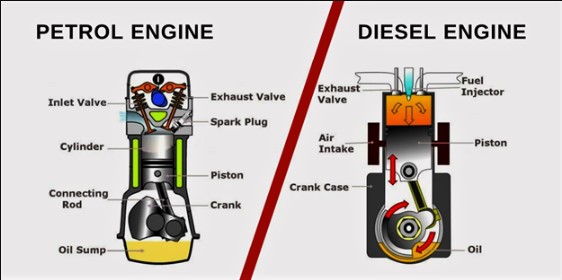
When choosing between diesel and petrol (gasoline) cars, consumers often notice that diesel cars are more expensive. This price difference can be attributed to various factors, including engine technology, manufacturing costs, fuel efficiency, market dynamics, and regulatory influences. Understanding these factors provides insights into why diesel cars command a higher price tag than their petrol counterparts. This analysis delves into these aspects to explain the cost disparity.
Engine Technology and Complexity
Diesel Engine Design
Diesel engines are inherently more complex and robust than petrol engines, contributing significantly to their higher cost. Several technical aspects underpin this complexity:
1. Compression Ratio – Diesel engines typically operate at higher compression ratios, ranging from 14:1 to 25:1, which is significantly higher than the petrol engines that are in the range of 8:1 to 12:1. The higher compression ratio in diesel engines is critical because they use compression ignition instead of spark ignition. To withstand these elevated pressures, diesel engines require robust and more durable components, such as the cylinder block, pistons, and connecting rods. These components are often constructed from high-strength alloys and undergo more rigorous manufacturing processes, which leads to increased production costs.
2. Fuel Injection System – Diesel engines are equipped with a direct fuel injection system where fuel is injected into the combustion chamber at extremely high pressures, often exceeding 30,000 psi. This system demands precision components such as advanced fuel pumps and injectors, which are more intricate and expensive to produce than the fuel injection systems in petrol engines. The latter usually operate at lower pressures and involve less complex technology.
3. Turbocharging – Modern diesel engines often feature turbocharging to enhance efficiency and performance. Turbochargers work by boosting the air pressure entering the engine, which enables more fuel to be burned, subsequently increasing the power output. However, turbochargers are high-cost components that demand additional engineering and manufacturing precision, leading to an overall increased cost of diesel engines.
Emissions Control Systems
Another significant factor contributing to the higher cost of diesel cars is the complex emissions control systems required to meet stringent environmental regulations. Diesel engines produce more nitrogen oxides (NOx) and particulate matter compared to petrol engines, necessitating advanced emissions control technologies:
1. Selective Catalytic Reduction (SCR) – Selective Catalytic Reduction (SCR) systems utilize a urea-based fluid, often referred to as AdBlue, to minimize NOx emissions. This system comprises extra components such as a dedicated urea injection system, a catalyst, and a separate tank for the AdBlue fluid. The inclusion of these components contributes to elevated manufacturing costs due to the associated complexity and additional materials.
2. Diesel Particulate Filters (DPF) – Diesel Particulate Filters (DPFs) are designed to capture and store exhaust soot to reduce particulate emissions. These filters necessitate regular regeneration cycles to burn off accumulated soot, which involves using complex control systems and high-temperature materials. The utilization of DPFs contributes to the initial and maintenance costs of diesel vehicles.
3. Exhaust Gas Recirculation (EGR) – EGR systems recirculate a portion of the exhaust gases back into the engine intake to lower combustion temperatures and reduce NOx emissions. These systems require precise control mechanisms and durable components to handle the high-temperature and corrosive nature of exhaust gases.
Manufacturing Costs
The complexity of diesel engines and their emissions control systems leads to higher manufacturing costs. Diesel engines require precise engineering, strong materials, and additional components compared to petrol engines. This complexity not only raises the cost of individual parts but also extends the production time and effort needed to assemble diesel engines.
1. Material Costs – Diesel engines typically require the use of more costly materials because of the necessity for increased strength and durability. For instance, certain components such as pistons and crankshafts may be manufactured from higher-grade steel or alloys, which are more expensive than those utilized in petrol engines.
2. Precision Engineering – The higher pressures and temperatures in diesel engines require tighter tolerances and more precise machining, which necessitates advanced manufacturing techniques and machinery, resulting in increased production costs.
3. Quality Control – The higher pressures and temperatures in diesel engines require tighter tolerances and more precise machining, which necessitates advanced manufacturing techniques and machinery, resulting in increased production costs.
Fuel Efficiency and Performance
Diesel engines are known for their superior fuel efficiency and torque compared to petrol engines. While this makes diesel cars attractive to consumers who prioritize fuel economy, it also contributes to their higher initial cost.
1. Fuel Efficiency – Diesel engines are generally 20-30% more fuel-efficient than petrol engines. This efficiency can be attributed to the higher energy density of diesel fuel and the more efficient combustion process in diesel engines. Manufacturers frequently allocate resources towards advanced technologies to enhance this efficiency, which may result in higher development and production costs.
2. Performance – Diesel engines typically generate more torque at lower RPMs than petrol engines, making them well-suited for towing and heavy-duty applications. However, achieving this level of performance involves the use of robust engine components and advanced engineering, which can contribute to higher costs.
Market Dynamics and Demand
Market dynamics and consumer demand are influential factors in the pricing of diesel cars. Historically, diesel cars have been favored in regions where diesel fuel is more affordable or where consumers prioritize fuel efficiency and torque for specific tasks such as towing or long-distance driving.
1. Consumer Perception – Diesel vehicles are often considered to be durable and reliable, particularly for high-mileage use. This perception can influence demand and enable manufacturers to set higher prices for diesel cars based on their perceived value.
2. Market Segmentation – Diesel cars are often positioned as premium offerings in many markets. They are commonly associated with larger, more expensive vehicles such as SUVs and trucks, which can help justify higher prices. Manufacturers utilize this market segmentation to target consumers who are willing to pay more for the benefits diesel engines offer.
Regulatory Influences
Emissions and fuel efficiency regulations have a substantial impact on the cost of diesel vehicles. Governments around the world have put in place strict emissions standards to address air pollution and climate change, with a particular focus on reducing NOx and particulate emissions from diesel engines.
1. Compliance Costs – To adhere to these strict regulations, the implementation of sophisticated emissions control technologies is necessary, as mentioned before. The expenses for researching and developing compliant technologies are significant and are frequently transferred to consumers.
2. Regulatory Testing – Diesel vehicles are subject to comprehensive testing to verify compliance with emissions standards. These tests are associated with significant costs and time investments, which contribute to the overall expenses involved in bringing diesel cars to market.
3. Future Uncertainty – The regulatory landscape is continuously evolving, with increasing pressure on manufacturers to reduce emissions further. The uncertainty surrounding future regulations can lead to additional costs as manufacturers invest in developing technologies that may be required to meet future standards.
Total Cost of Ownership
While diesel cars are more expensive upfront, they often offer lower total cost of ownership over time due to their fuel efficiency and durability. However, this calculation can be complex and varies depending on several factors:
1. Fuel Costs – Diesel fuel generally has a higher energy density than petrol, allowing diesel cars to achieve greater mileage per gallon of fuel. In areas where diesel fuel is priced lower than petrol, this can lead to substantial long-term savings on fuel costs.
2. Maintenance and Repairs – Diesel engines are known for their durability and generally require less frequent maintenance compared to petrol engines. However, in the event of repairs, the complexity and cost of diesel engine components can make the repair expenses higher.
3. Resale Value – Diesel vehicles are often associated with higher resale values compared to petrol vehicles, which may reflect their durability and fuel efficiency. This higher resale value may help mitigate some of the initial purchase cost differences.
4. Incentives and Taxes – In some regions, governments offer incentives for purchasing fuel-efficient or low-emission vehicles, which can reduce the effective cost of diesel cars. Conversely, higher taxes on diesel fuel or diesel vehicles in some areas can increase the total cost of ownership.
In conclusion, the higher price of diesel cars compared to petrol cars can be attributed to several interrelated factors. Diesel engines’ inherent complexity and the need for robust materials and precise engineering significantly increase manufacturing costs. Advanced emissions control systems, necessary to meet stringent environmental regulations, add further to these costs. Diesel cars’ superior fuel efficiency and performance also play a role, as do market positioning and consumer perception.
While diesel cars have higher upfront costs, they often offer benefits that can reduce the total cost of ownership over time, such as improved fuel efficiency, durability, and higher resale values. However, the cost-benefit analysis varies depending on individual driving habits, fuel prices, maintenance costs, and regulatory environments.
Understanding these factors can help consumers make informed decisions when choosing between diesel and petrol vehicles and can also inform policy decisions aimed at promoting more sustainable transportation options. As the automotive industry continues to evolve, with increasing emphasis on electric and alternative fuel vehicles, the dynamics of diesel versus petrol cars will likely continue to change, reflecting broader trends in technology and regulation.